
Successful weight management often involves much more than simply eating less food. Consistency, meal planning, portion awareness, nutritional balance, shopping habits, and daily routines are all commonly connected to long-term wellness and sustainable body weight management.
Many individuals only begin paying closer attention to structured meal planning after experiencing repeated dieting cycles, inconsistent eating patterns, emotional snacking, or difficulty maintaining healthy habits during busy schedules.
These gradual challenges may sometimes be influenced by poor food preparation habits, lack of planning, convenience food dependence, emotional eating patterns, and inconsistent nutritional routines.
This growing awareness of practical meal planning is one reason programs like Simple Slim Kitchen continue attracting attention among individuals looking for easier ways to organize healthy eating and weight management routines.
What Is Simple Slim Kitchen?
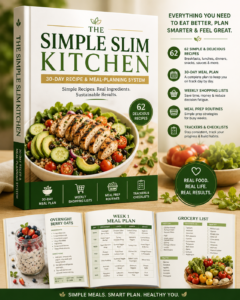
Simple Slim Kitchen appears to be a meal-planning and healthy eating resource focused on helping users simplify food preparation, organize meals, and build sustainable eating habits that support long-term weight management goals.
Programs in this category generally focus on practical nutrition strategies, meal organization, shopping guidance, and habit-building systems rather than promoting extreme dieting methods.
See official access details and program information here
Why Meal Planning Often Supports Weight Management Goals
Nutrition experts frequently emphasize meal planning because it helps reduce impulsive food choices, supports portion awareness, minimizes food waste, and improves consistency. Structured meal plans are commonly associated with better adherence to healthy eating goals and long-term weight management success.
Some commonly discussed benefits of structured meal planning include:
– easier grocery shopping
– reduced food waste
– improved portion awareness
– better nutritional consistency
– reduced decision fatigue
The Everyday Habits Often Connected to Weight Challenges
Many weight management obstacles develop gradually through repeated lifestyle patterns.
– skipping meals
– emotional eating
– excessive snacking
– poor meal preparation habits
– inconsistent food choices
Over time, these repeated patterns may influence appetite regulation, energy balance, and overall nutritional consistency.
Some individuals first notice these changes through stronger cravings, inconsistent energy levels, reduced motivation, or difficulty maintaining healthy eating habits.
A related discussion can be found here: how everyday routines may gradually influence long-term weight management and wellness naturally
How Simplicity Often Improves Diet Adherence
One common challenge with many nutrition programs is complexity. Complicated recipes, expensive ingredients, and extensive preparation requirements may make healthy eating harder to maintain over time.
Simple meal planning approaches are frequently associated with easier adherence because they reduce preparation time, simplify shopping lists, and help individuals stay consistent even during busy schedules.
Many successful weight management strategies emphasize sustainability rather than perfection.
Why Some Individuals Explore Meal Planning Programs
People exploring programs in this category often look for:
– easier meal preparation
– healthier food choices
– structured eating plans
– weight management support
– sustainable nutrition habits
Programs that focus on practical implementation often appeal to individuals who struggle with maintaining consistency rather than understanding nutrition concepts themselves.
Current program information and availability can be explored here
Important Things Worth Understanding
People expecting dramatic overnight weight loss may misunderstand how meal planning programs are generally intended to work.
Long-term weight management often depends on consistent lifestyle habits involving nutrition quality, movement routines, sleep consistency, hydration support, and emotional wellness.
Meal planning can support these goals, but it is not a replacement for broader healthy lifestyle practices.
The Bigger Picture Behind Sustainable Weight Wellness
The body generally responds more effectively to repeated healthy habits practiced consistently over time.
Meal preparation, shopping organization, nutritional balance, recovery consistency, stress management, and physical activity may all contribute to broader wellness outcomes.
This broader topic also connects with: how sustainable routines may support long term metabolism wellness naturally
Many sustainable wellness improvements are commonly associated with gradual consistency rather than aggressive short-term expectations.
Questions People Often Ask
Does Simple Slim Kitchen replace professional nutritional advice?
No. Programs in this category are generally intended as educational and organizational tools rather than personalized medical nutrition therapy.
Can meal planning help support weight management?
Structured meal planning is commonly associated with improved dietary consistency, portion awareness, and adherence to healthy eating goals.
Why do simple meal plans often work better long term?
Simpler systems are often easier to follow consistently because they reduce complexity, preparation time, and decision fatigue.
How long does it usually take to notice progress?
Most healthy lifestyle approaches focus on gradual improvements through consistent long-term habits rather than immediate results.
Visit the official website for updated access details and program information
Affiliate Disclosure
This article may contain affiliate links.
Disclaimer
This content is for informational and educational purposes only.